
Elektron Octatrack MKII – Manual and Overview

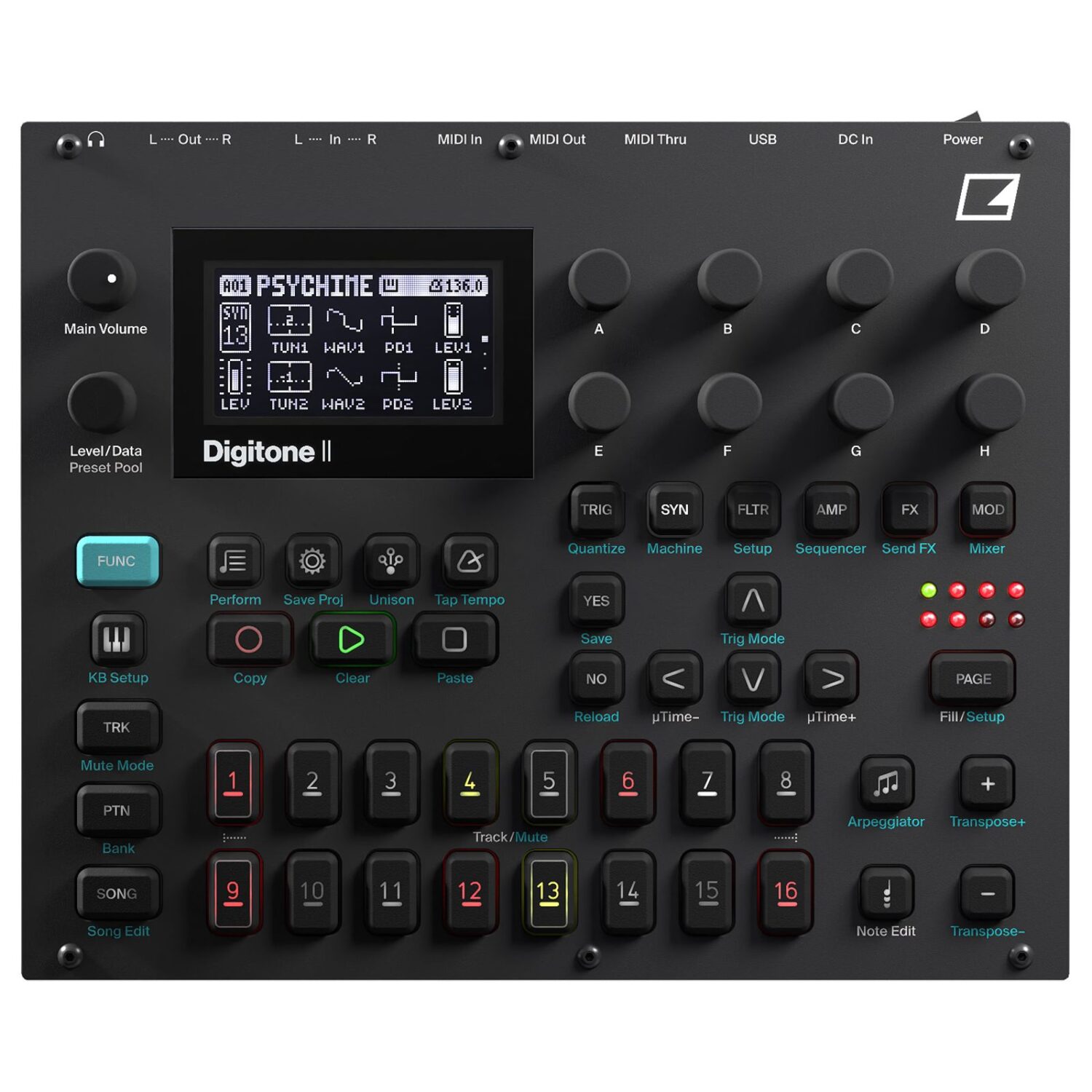
The Elektron Digitone II picks up where the first machine left off and pushes deeper into that space where FM synthesis becomes something you can actually play instead of decode. Elektron keeps the core idea intact—make frequency modulation feel immediate, tactile, and musical—but opens things up with more voices, more layering potential, and a broader sound palette that doesn’t box you into the same handful of tones. It still carries that Elektron identity where sound design and sequencing happen together, where you build the track as you shape the sound.
The character of the Digitone II leans into clarity and precision, but it never feels sterile. You can dial in sharp, percussive hits that cut through a mix, then pivot into soft, glassy chords or unstable textures that drift and bend over time. The machine handles harmonic content in a way that invites exploration. FM has a reputation for getting out of control fast, but here it stays grounded. Ratios, operators, and envelopes feel connected to the result you hear, so you spend less time guessing and more time refining. That makes a difference when you’re working quickly or trying to capture an idea before it slips away.
The sequencer plays a big role in how the Digitone II comes alive. Parameter locks, micro-timing, and conditional trigs turn simple patterns into evolving phrases. Each step can carry its own version of the sound, shifting tone, modulation, and movement across the pattern without breaking flow. You can build sequences that feel static on paper but move constantly when you listen back. That approach fits well in electronic music where repetition matters, but variation keeps things engaging.
In a broader setup, the Digitone II holds its own as both a centerpiece and a supporting voice. It can handle chords, bass, leads, and rhythmic elements without feeling stretched thin, and it integrates cleanly with other gear through MIDI. It rewards time spent with it. The more you learn how the engine responds, the more it starts to feel like an instrument rather than a box of features. For anyone working in electronic music who wants the depth of FM without the usual friction, the Digitone II lands in a strong place—flexible, expressive, and built for people who think in patterns and motion.
Key Features
- Polyphonic FM synthesis engine with expanded voice count
- Multiple operators with simplified routing for musical sound design
- Four synth tracks with independent sound control
- Elektron sequencer with parameter locks, micro-timing, and conditional trigs
- Per-step sound variation for evolving patterns
- Built-in effects including delay, reverb, chorus, and filtering
- Multimode filters and envelopes for shaping tone and dynamics
- Modulation options for creating movement within patches
- MIDI sequencing capabilities for controlling external gear
- Pattern-based workflow with project and kit management
- Sound pool for quick access to patches within a project
- Performance-friendly interface with responsive encoders and clear display
- Stereo outputs and flexible routing options for studio and live use
- Solid metal enclosure designed for long-term use and performance